
Automating Distributor Education: Why You Need an Integrated LMS

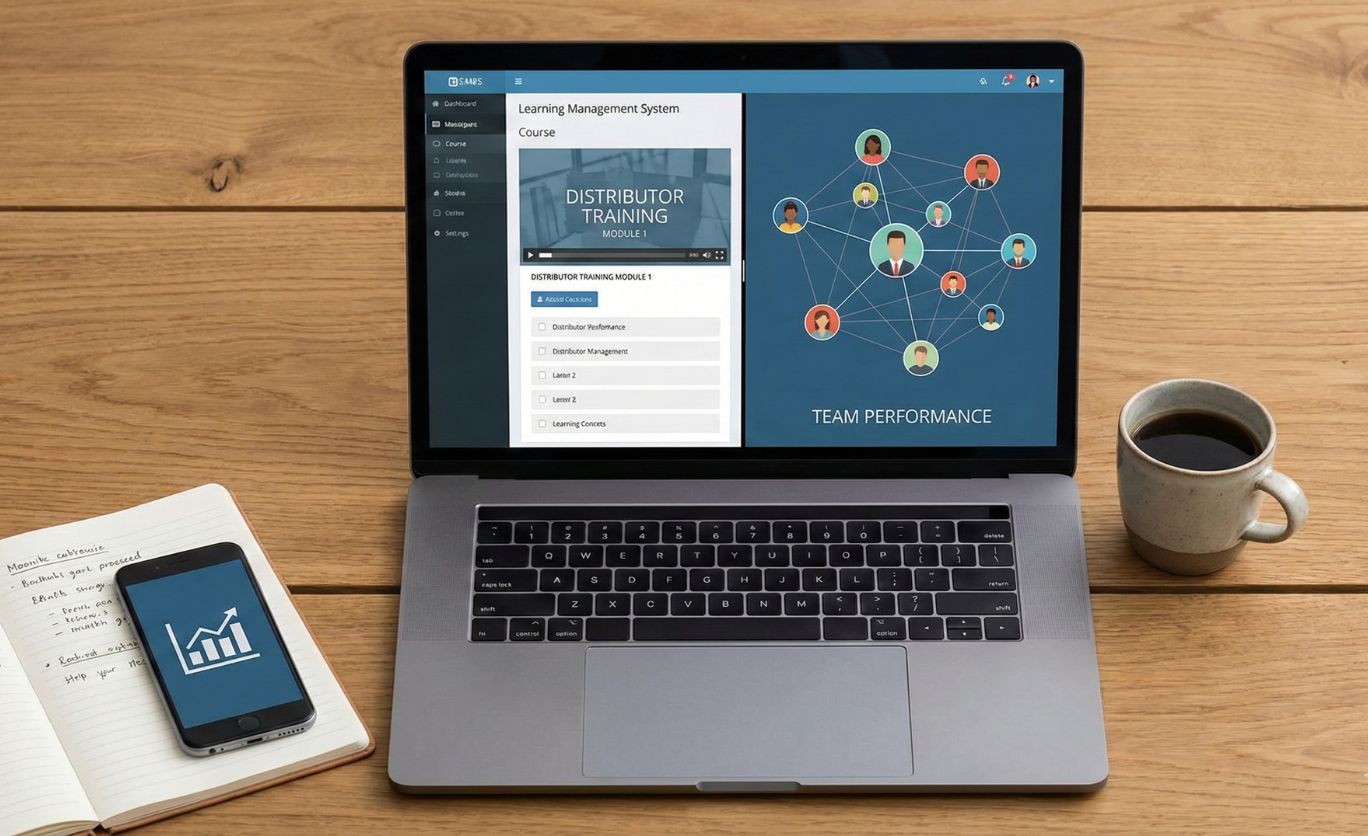
How can MLM businesses train distributors as their networks grow? Manual calls, scattered PDFs, and one-off webinars quickly become hard to manage and inconsistent. Distributor education automation solves this by using technology to deliver structured, standardized training through one centralized system.
This approach is powered by an integrated Learning Management System (LMS) built directly into MLM software. When training is connected to onboarding, sales activity and rank progression, an integrated LMS makes it easy to see how learning impacts actual performance. This blog looks into what distributor education automation is, why traditional training methods fall short, how an integrated LMS works, and the key benefits it brings to onboarding, engagement, performance tracking and retention.
We’ll also cover must-have LMS features, implementation best practices, common pitfalls to avoid, and emerging trends shaping the future of distributor education, giving you a complete view of how an integrated LMS can turn training into a growth advantage.
Distributor education automation is the use of technology to deliver and manage distributor training automatically within a network marketing business. It replaces manual onboarding, inconsistent upline training, and scattered resources with structured, standardized learning programs.
An integrated LMS is built directly into MLM software, connecting training with distributor profiles, ranks and performance data. Unlike standalone LMS platforms, it tracks learning progress alongside real business outcomes.
Training distributors effectively has always been one of the biggest challenges in network marketing. While education directly impacts productivity and retention, most MLM organizations struggle to deliver it consistently.
In many MLM models, training responsibility falls to uplines. While mentorship is valuable, it often leads to inconsistencies in messaging, product knowledge, compliance understanding, and sales techniques. New distributors may receive outdated or incomplete information depending on who trains them.
As organizations grow, onboarding hundreds or thousands of distributors through live calls, webinars, or one-on-one sessions becomes impractical. Manual onboarding slows growth, consumes leadership time and delays distributor productivity.
Without structured learning paths, distributors often feel overwhelmed. Long videos, unorganized content libraries and lack of motivation lead to poor engagement and low training completion rates, especially among part-time distributors.
Many MLM companies have no reliable way to track who completed which training, how well they performed, or whether learning translated into results. This lack of visibility makes it difficult to improve training programs or identify skill gaps.
A Learning Management System (LMS) is a digital platform designed to create, deliver, manage, and track training programs. In MLM, an LMS becomes truly powerful when it is integrated directly into the core MLM software.
A standalone LMS operates as a separate system, requiring manual user syncing and limited data sharing. An integrated LMS, on the other hand, connects directly with distributor profiles, compensation plans, ranks and activity data.
See how an integrated LMS can automate distributor education, improve engagement, and connect learning directly to real performance inside your MLM platform.
Automating education impacts more than just knowledge retention—it drives business growth.
An automated LMS provides a consistent onboarding experience to every distributor, regardless of location, language, or sponsor. New members receive the same core training on products, processes and compensation, reducing confusion and errors. This standardization builds confidence early and helps distributors become productive much faster.
Interactive LMS features such as gamification, quizzes, progress tracking, and certifications make learning more engaging. Clear milestones and rewards motivate distributors to complete training, while mobile-friendly access allows them to learn at their own pace, leading to significantly higher participation and completion rates.
Most distributors balance their business with other commitments. An automated LMS provides 24/7 access to training materials from any device, removing time zone and scheduling barriers. This flexibility empowers distributors to learn when it suits them best.
Integrated analytics give businesses clear visibility into training performance. Companies can track course completion, identify skill gaps, measure learning effectiveness, and link training outcomes directly to sales performance and rank advancement.
Automation minimizes the need for repetitive live training sessions and manual administration. Furthermore, it mitigates expensive legal risks by creating an audit trail that proves distributors have completed mandatory compliance training. This reduces potential regulatory fines and saves leadership time.
A successful LMS for distributor education must be designed around flexibility, engagement, and growth. The following features are essential for supporting diverse, fast-growing MLM networks.
Distributors rely heavily on mobile devices. A mobile-optimized LMS with offline access ensures uninterrupted learning, even in low-connectivity regions, allowing training anytime and anywhere.
Gamification increases motivation and participation by turning learning into a rewarding experience. Badges, points, and leaderboards encourage healthy competition and drive higher course completion rates.
Short, focused learning units help distributors absorb information quickly without feeling overwhelmed. Microlearning fits perfectly into busy schedules and improves knowledge retention.
Global MLM networks require training content in multiple languages. Multilingual support ensures cultural relevance, clear understanding and consistent training across regions.
Automated alerts prompt distributors to start, continue, or complete courses. These reminders reduce drop-offs and keep learning aligned with business timelines.
Analytics provide visibility into training performance, completion rates, and skill gaps. This data helps businesses optimize training strategies and measure impact on sales and growth.
Role-based access ensures distributors, leaders, and admins see only relevant content. This keeps learning structured, secure, and aligned with rank or responsibility.
Implementing an integrated LMS successfully requires a structured approach that focuses on both technology and people.
Begin by rolling out the LMS to a small group of distributors or a specific region. This allows you to test usability, content relevance, and system performance, while gathering feedback before a full-scale launch.
Design training programs around clear objectives such as faster onboarding, increased sales productivity, leadership development, or compliance. When distributors see a direct connection between training and results, engagement improves.
Connecting the LMS with CRM or ERP systems ensures smooth data sharing between training, distributor activity, and performance metrics. This integration enables better reporting, automation and decision-making.
Upline leaders play a key role in encouraging LMS usage. Equip them with the knowledge and tools to guide their teams, reinforce learning benefits, and lead by example.
Use analytics to monitor engagement, completion rates, and learning outcomes. Regularly update content based on insights to keep training relevant and effective.
Even with a strong LMS in place, certain mistakes can limit its effectiveness. Being aware of these pitfalls helps ensure long-term success.
The table below compares an integrated LMS with standalone tools and traditional training methods, highlighting key differences:
| Training System | Pros | Cons |
|---|---|---|
| Integrated LMS (Built into MLM Platform) | • Smooth user and role management • Real-time training progress tracking • Direct alignment with ranks, commissions, and performance • Unified and improved distributor experience |
• Requires upfront platform investment |
| Standalone LMS Tools | • Quick and easy to set up • Suitable for generic or one-size-fits-all courses |
• Manual user and data syncing • Limited MLM-specific workflows • Disconnected from compensation and performance metrics |
| Traditional Classroom / Webinar Training | • Allows personal interaction and live discussions | • Not flexible for growing networks • Time-consuming to organize and repeat • Difficult to track learning progress and outcomes |
Distributor education is rapidly evolving as technology becomes more intelligent and deeply integrated into MLM platforms.
AI-Powered Personalized Learning Paths: Artificial intelligence will customize training journeys based on distributor behavior, performance, and skill gaps.
Embedded Learning Within Distributor Dashboards: Training will be built directly into everyday dashboards, reducing friction and increasing adoption.
Predictive Analytics to Identify Churn Risk: Analytics will use learning activity to predict disengagement early, allowing proactive support.
Social Learning and Peer Collaboration: Discussion forums, team challenges, and peer mentoring will become core LMS components.
As MLM businesses grow, distributor training can’t depend on scattered resources or manual efforts. Teams need a simple, consistent way to learn, improve and move forward without delays or confusion.
That’s where an integrated LMS makes a real difference. By bringing training directly into the MLM platform, companies can ensure every distributor gets the right guidance at the right time whether they’re just getting started or building a team.
The result is faster onboarding, better engagement, and clearer connections between learning and performance. When done right, distributor education stops being a challenge and becomes a strong foundation for sustainable growth.
Don’t let manual processes slow down your network’s growth. Experience how our system seamlessly links education to rank advancement.
Distributor education automation is the use of technology to deliver, manage, and track training for distributors automatically, ensuring consistent, high-quality learning across the network.
An integrated LMS is embedded directly within MLM software, connecting training to distributor profiles, ranks, and performance metrics. Standalone LMS platforms operate separately and require manual data syncing.
Benefits of using an integrated LMS include faster and standardized onboarding, higher engagement and completion rates, on-demand learning, actionable analytics, and cost/time efficiency.
Key functions include course creation, user enrollment with role-based access, progress tracking, certifications and compliance, and advanced analytics for reporting and optimization.
Features like gamification, mobile access, microlearning modules, automated notifications, and social learning encourage participation and course completion.
Common pitfalls include not linking training to KPIs, content overload, poor mobile experience, and outdated training materials.
Best practices include starting with a pilot program, aligning training with business goals, integrating with CRM/ERP systems, training leaders to promote adoption, and continuously optimizing content with analytics.
An integrated LMS drives measurable results by improving onboarding speed, increasing retention, linking learning to compensation and ranks, and fostering a more skilled and productive distributor network.
Product Specialist & Research Head

Are you on the lookout for a cost-effective software solution with advanced features for your MLM business? Infinite MLM software might just be the thing for you.
Connect with Us